
Ask a sports bra supplier to declare materials by physical component, rather than applying one catalogue fabric description to the whole garment. Identify the selected style, ask which shell, lining and cup or pad components are actually supplied, and record the statement that belongs to each confirmed part. Keep unknown components open until the supplier answers. A product photograph cannot establish fibre composition or prove what is inside a garment.
A purchasing team may receive a fabric description, a quotation and a sample photograph that all appear to describe the same bra. The difficulty is deciding what that description covers. Does it apply to the outer fabric only, or also to an inner layer? Are any cups included? A component declaration makes these questions visible before a buyer repeats an incomplete statement in an order or product listing.
Start with one identifiable catalogue style
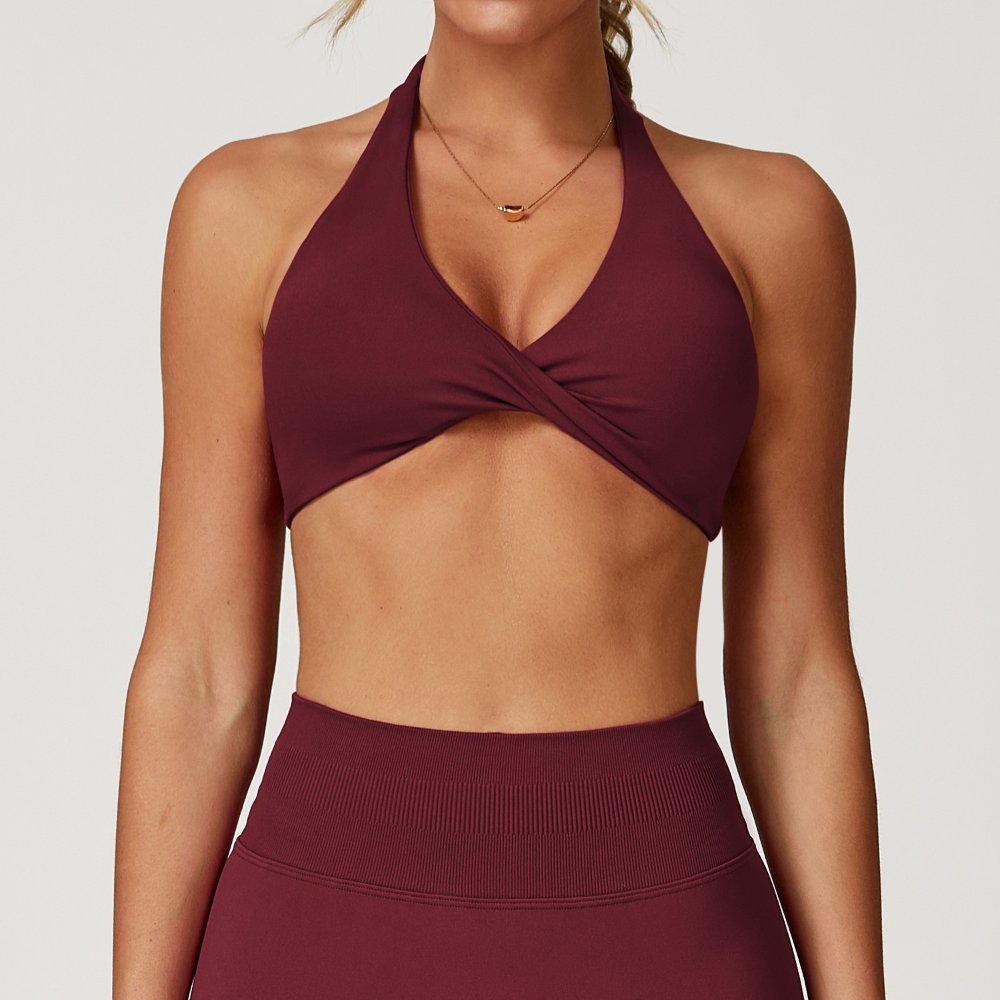
The Jinsheng catalogue reference for this enquiry is the #8503 Cloud-Feel Halter-Neck Yoga Bra. Its historical official product page identifies a halter neckline and a deep-V design. Use the full name and linked page to identify the garment being discussed, then ask the supplier to confirm the current quoted variant. The page’s fabric and function wording remains a supplier description, not independent verification of the garment delivered against a future order.
Product reference:
https://js-yogaclothes.com/product/8503-cloud-feel-halter-neck-yoga-bra/
The selected burgundy front-view photograph helps identify the catalogue design. It does not show every internal component. Do not add a lining, removable pad, closure or reinforcement to the supply list merely because another bra has one. The first supplier response should establish which parts exist on the exact quoted style before the buyer asks for their individual declarations.
Build the component list before requesting percentages
Begin with the visible outer fabric as one proposed row. Add separate enquiry rows for any inner fabric and any cup or pad. These rows are questions until the supplier confirms their presence. Give the supplier a clear way to answer not included, not applicable or information pending. An empty cell should not silently become a promise that the component is supplied.
Use component names that both parties can locate on a marked photograph or simple garment sketch. If the supplier uses a different term for the same part, keep both names together rather than replacing one without explanation. Conversely, two different parts should not share a row just because the quotation describes them using similar language.
Once the supplied parts are clear, request the material statement for each relevant component. Ask the supplier to identify the source of that statement and the exact style or variant it covers. Do not extend the outer fabric’s stated blend to a lining or cup without a separate answer. The purpose is accurate attribution, not producing a more impressive list of materials.
A buyer’s component declaration sheet
Component | Supply question | Declaration to request | Evidence reference | Buyer response
Outer fabric | Which exact outer fabric is quoted? | Supplier’s statement for that fabric | Named document or agreed reference | Accept, clarify or leave open
Inner fabric | Is an inner fabric supplied on this variant? | Separate statement if present | Marked component and supplier reference | Do not infer from the shell
Cup or pad | Is any cup or pad included? | Relevant component declaration if included | Supplier’s identified component | Do not assume removability
Other included parts | Which additional parts need identification? | Statement appropriate to the confirmed part | Marked garment reference | Keep unconfirmed parts open
Keep the table attached to the selected style reference. A description copied from another item in a wholesale sports bras catalogue can create a convincing but incorrect record. If the supplier proposes a substitute component, ask for an updated entry and identify the affected order line before accepting the substitution.
Connect statements to the sample being discussed
Request a supplier-marked view showing where each confirmed component sits in the sample. A normal front photograph may identify the style but leave internal parts unseen. Ask for an additional view or written explanation only where it resolves a specific open row. The buyer should not describe unseen construction as established fact or require an unsupported interpretation of a catalogue photograph.
Record who supplied each statement and which sample or document it refers to. When the sample and quotation appear inconsistent, describe the difference precisely. For example, the declaration may refer to an inner layer that the supplier has not yet confirmed for the sample. Ask about that component directly, rather than assuming that every material entry applies to every version of the garment.
Separate material identity from performance language
A component declaration answers what the supplier says a part is made from. It does not, by itself, establish support, moisture handling, durability, comfort or another performance outcome. Those questions require their own agreed evidence and scope. Keep catalogue function words outside the component table unless the enquiry clearly labels them as unverified descriptions requiring clarification.
The same boundary applies to fibre authenticity and certificates. Do not turn a commercial material statement into an independent test result. If a buyer needs further evidence, identify the requirement separately and ask what documentation is available for the particular material and order. Avoid implying that the catalogue page or selected photograph already supplies that evidence.
Use the declaration when comparing quotations
Compare supplier responses row by row. A lower quotation may describe a different component scope, while a longer description may still leave the inner construction unanswered. Ask whether both quotations cover the same confirmed parts before treating their wording as directly comparable. No particular material, price or production capability should be assumed from the length of the response.
Before passing the record to another team, distinguish accepted statements from questions still awaiting an answer. Keep the original supplier response beside any buyer summary. This helps purchasing, product and receiving colleagues understand where the information came from without rewriting an uncertainty as a confirmed specification.
Frequently asked questions
Can the catalogue blend describe the entire sports bra?
Only if the supplier confirms that scope for the exact variant. Start by asking which physical component the statement covers. Do not automatically apply an outer-fabric description to an inner layer, cup or other part.
Does the selected photograph prove that cups are included?
No. The front catalogue image identifies the garment’s visible design. Ask the supplier whether cups or pads are supplied, how they relate to the selected variant and which component statement applies. Removability also remains a separate question.
Should every component have the same material description?
Do not impose that assumption. Request a declaration appropriate to each confirmed part, and let the supplier identify differences. If a response uses one description for several parts, ask the supplier to state that scope explicitly.
What should remain open before ordering?
Any unconfirmed component, unclear declaration scope or mismatch between the supplier’s statement and the selected sample should remain visible. The buyer can then decide what needs clarification before accepting the relevant order line.
Send a focused component enquiry
Ask Jinsheng to confirm the selected #8503 variant, identify its supplied components and return the component sheet with appropriate material references. State that unanswered rows remain open and that performance claims are outside this declaration. Use the contact page for the enquiry and the blog for further purchasing topics.
Contact:
https://js-yogaclothes.com/contact/
Blog:
https://js-yogaclothes.com/blog/