Wholesale Yoga Pants: Choose the Leg Shape
Choose wholesale yoga pants by defining the leg shape, intended hem position and fit reference before comparing samples. Flared, straight-leg and fitted designs require different measurement points and photographs. Use the exact product reference and a marked measurement sheet so that a model name or catalogue pose does not become the entire specification.
A buyer can shortlist several black yoga pants and still be comparing different garments. The difference may sit below the knee, in the waistband or at the hem. Jinsheng’s yoga apparel catalogue provides named flared, straight-leg and high-waisted examples. Treat those styles as visual references while preparing the measurements and sample questions that matter to your collection.
Name the silhouette in observable terms
Describe what the garment should look like from the front, side and back. For a flared style, mark where the leg begins to widen and how the hem sits around the shoe. For a straighter line, show the desired relationship between knee and hem. For a fitted design, define the intended lower-leg outline without promising a compression effect.
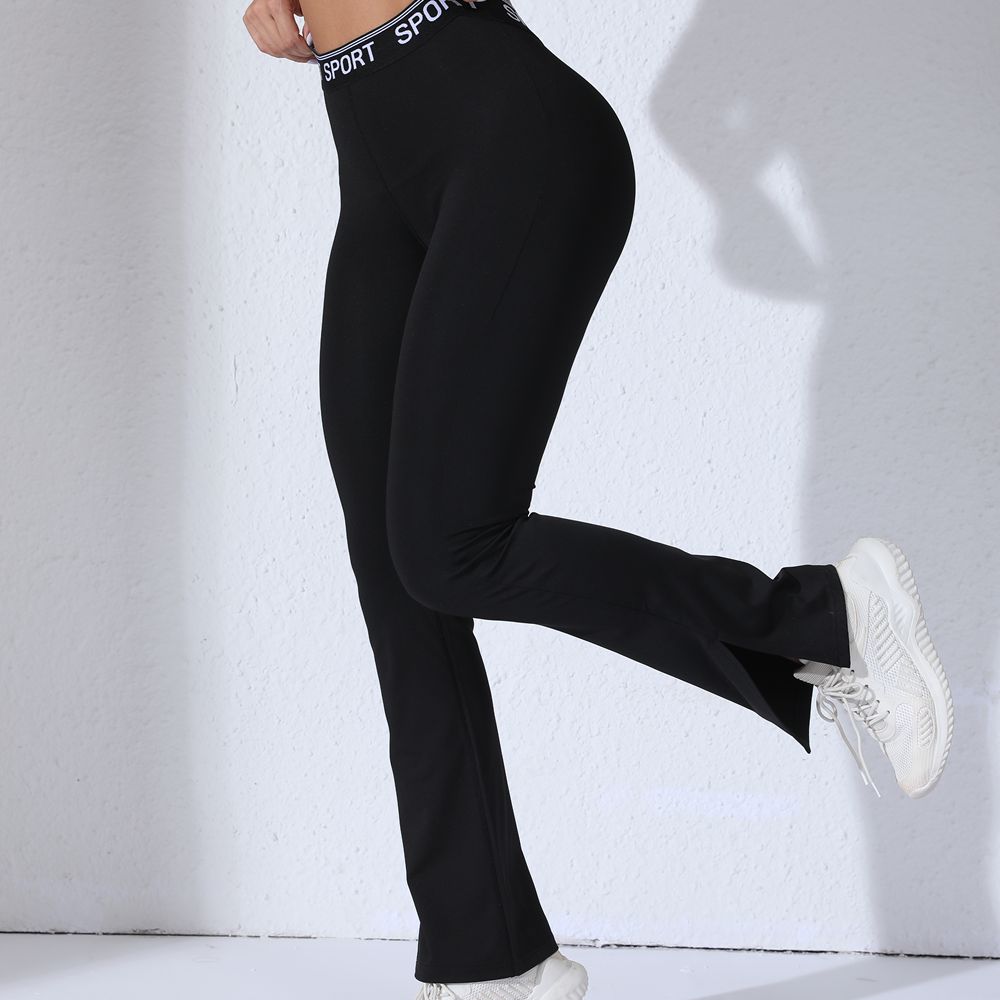
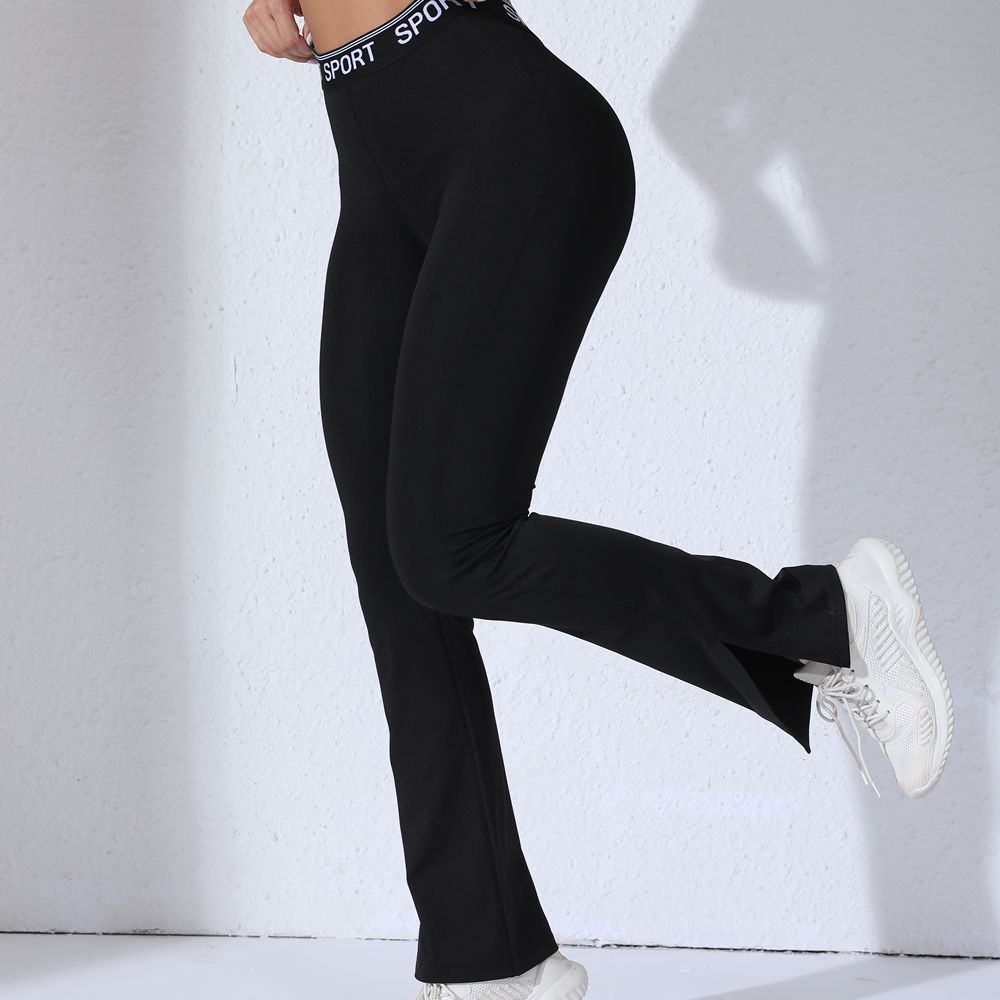
The flared leggings #248-1 show a widened lower leg and a visible waistband marking in the catalogue image. Decide whether those details belong in the selected sample. A request for the same silhouette should identify both the overall shape and any visible trim or marking that requires separate confirmation.
- Use one unambiguous product reference per sample.
- Mark measurement positions on a garment diagram.
- Approve hem position with the intended footwear.
Use a comparison that guides sample selection
Choose a reference because it answers an assortment need, not because its photograph is more attractive. A wider hem can be relevant to an outfit-led collection; a straighter shape may create a different styling line; a fitted bottom changes the lower-leg outline again. None of these visual categories establishes the garment’s durability, opacity or support level.
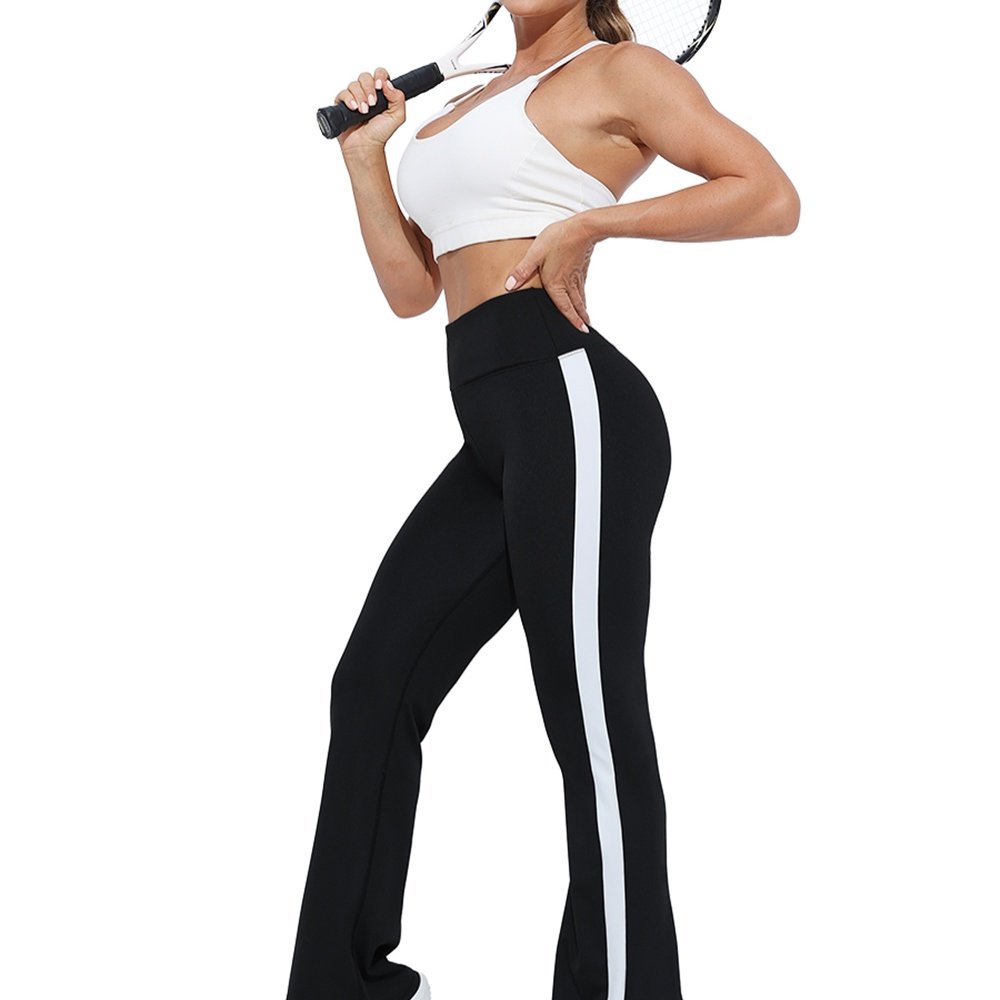
Compare straight-leg yoga pants #W918 with the chosen flared reference using photographs at the same angles. Note the visible side detail as well as the leg line. If the style name and photograph leave a feature unclear, turn that point into a written sample question rather than filling the gap with an assumption.
| Leg shape | Useful reference point | Approval question |
|---|---|---|
| Flared | Knee-to-hem transition | Where does widening begin? |
| Straight-leg | Lower-leg line | Does the sample follow the selected outline? |
| Fitted | Calf and ankle shape | Is the observed fit consistent with the brief? |
Measure the leg at the points that create the shape
Ask for a garment measurement diagram that shows the waist, rise, hip, thigh, knee, inseam and hem. State whether widths are measured flat or as full circumferences. Mark the position used for the knee measurement so that two sample records do not describe different places on the garment using the same heading.
Photograph the sample beside the measurement sheet and record its size identifier. For flared or straight-leg pants, include the lower-leg outline and hem opening in the review. For fitted pants, inspect the chosen outline along the calf and ankle. Set the required measurement tolerances with the supplier; a catalogue picture does not supply those limits.
Review length with the intended outfit
Length becomes easier to judge when the sample is worn with the footwear and top proportion intended for the range. Record the fit reference and photograph the hem from the side as well as the front. Check standing, sitting and walking positions for visible dragging, unexpected bunching or a hem position that differs from the brief.
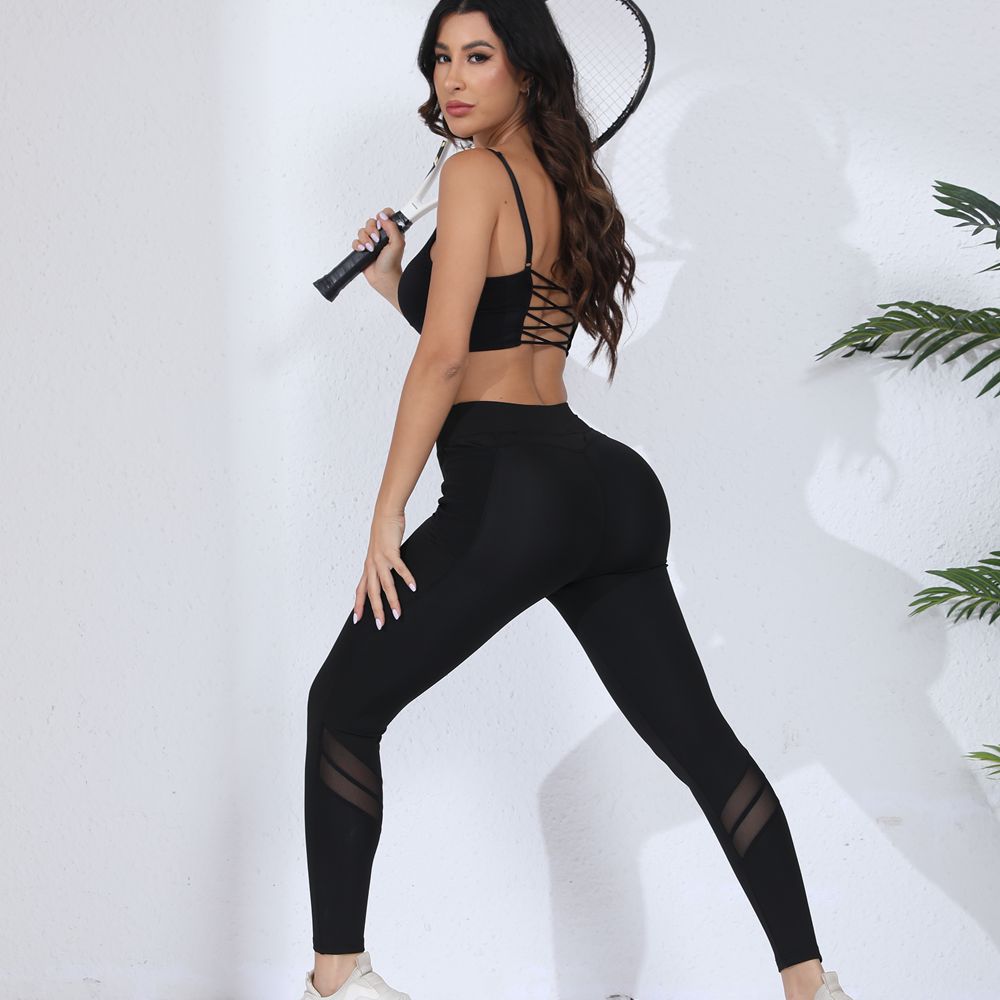
Jinsheng also lists high-waisted yoga pants #048. Use its product reference when requesting a fitted comparison, then confirm the sample’s actual leg shape and length. A high waist describes the waist position; it does not by itself define whether the lower leg will be fitted, straight or flared.
Close the specification before requesting quantities
Collect the silhouette photographs, selected style reference and agreed measurements in one approval file. Separate accepted features from requested changes. If the waistband, side stripe or hem needs a different treatment, identify the change in the annotated image and ask for confirmation that the quoted sample will reflect it.
Submit the selected style, colour references, size breakdown and packing requirements through Jinsheng’s enquiry page. Ask for the current options for that exact specification. Keep requests for material documentation or performance evidence separate from visual silhouette approval so that a good-looking sample is not mistaken for proof of every intended retail claim.
Frequently Asked Questions
Does high-waisted mean fitted through the leg?
No. Waist position and leg shape are separate design choices. State both and confirm the actual sample instead of relying on one term.
Can the same inseam work across different silhouettes?
Review each selected silhouette on the intended fit reference. Hem shape and footwear can change the observed result even when a recorded length is similar.
What is missing from a front-only sample photograph?
It may conceal side details, back shaping and the way the hem sits around footwear. Add side and back views with the same sample identifier.
Does a product photograph prove opacity?
No. If opacity is part of the retail brief, agree how it will be evaluated and retain the relevant evidence for the selected material and colour.