
Yoga Clothing Sets: Approve Both Pieces Together
Approve wholesale yoga clothing sets as complete outfits: identify the exact top and bottom, check their fit together, compare colour and trim under the same light, and record how each pair will be packed. A shared colour name or matching photograph does not establish that every available garment combination is included in an order.
For a brand buyer, the purchasing unit may be a set while the fitting work still involves two garments. The top can fit correctly while the waistband, rise or trouser length needs a separate decision. Jinsheng lists colour-block sets, cross-back sets and jacket outfits in its product catalogue. Use those references to define a precise outfit before requesting a quotation.
Define the pieces before discussing the collection
Begin with a component list, not a mood board alone. State whether the top is a bra, longer tank or jacket; identify the selected bottom as shorts, fitted pants or a flared style. Attach front and back references so that neckline, back coverage and hem shape remain visible when the enquiry passes between design and purchasing.
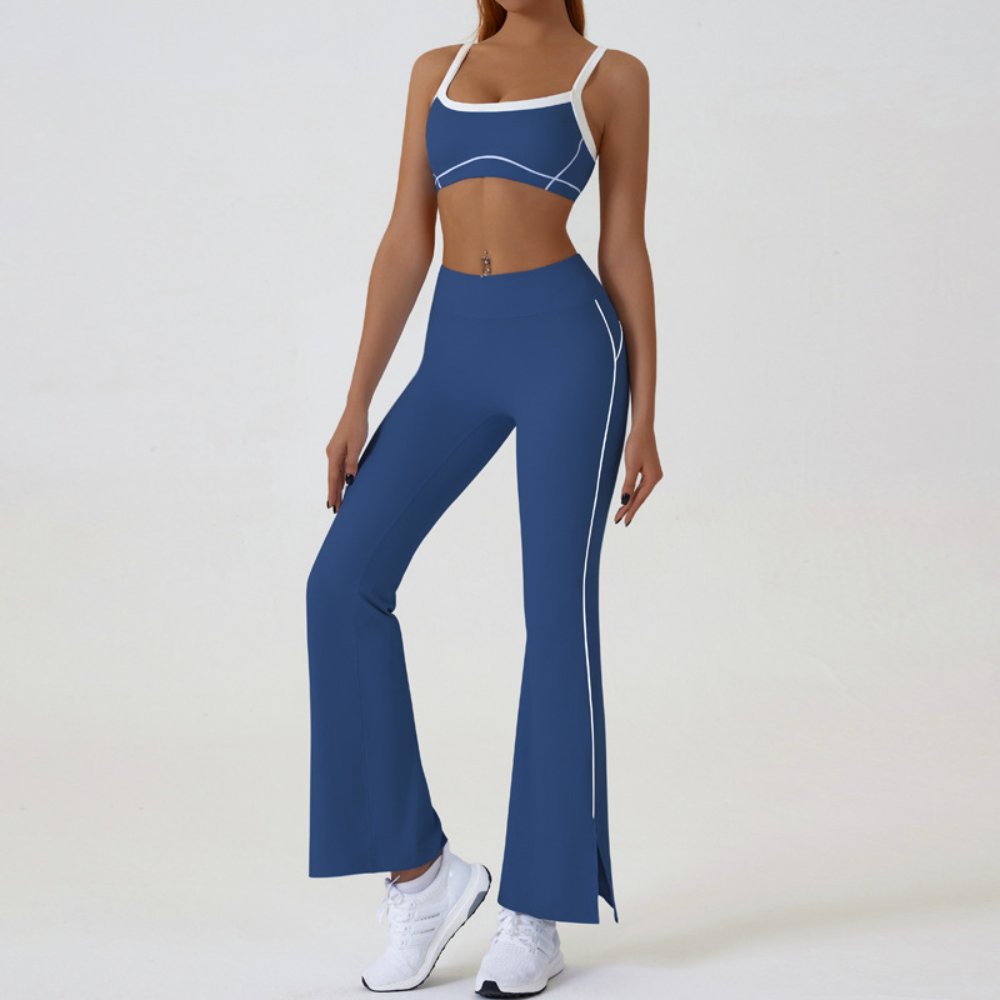
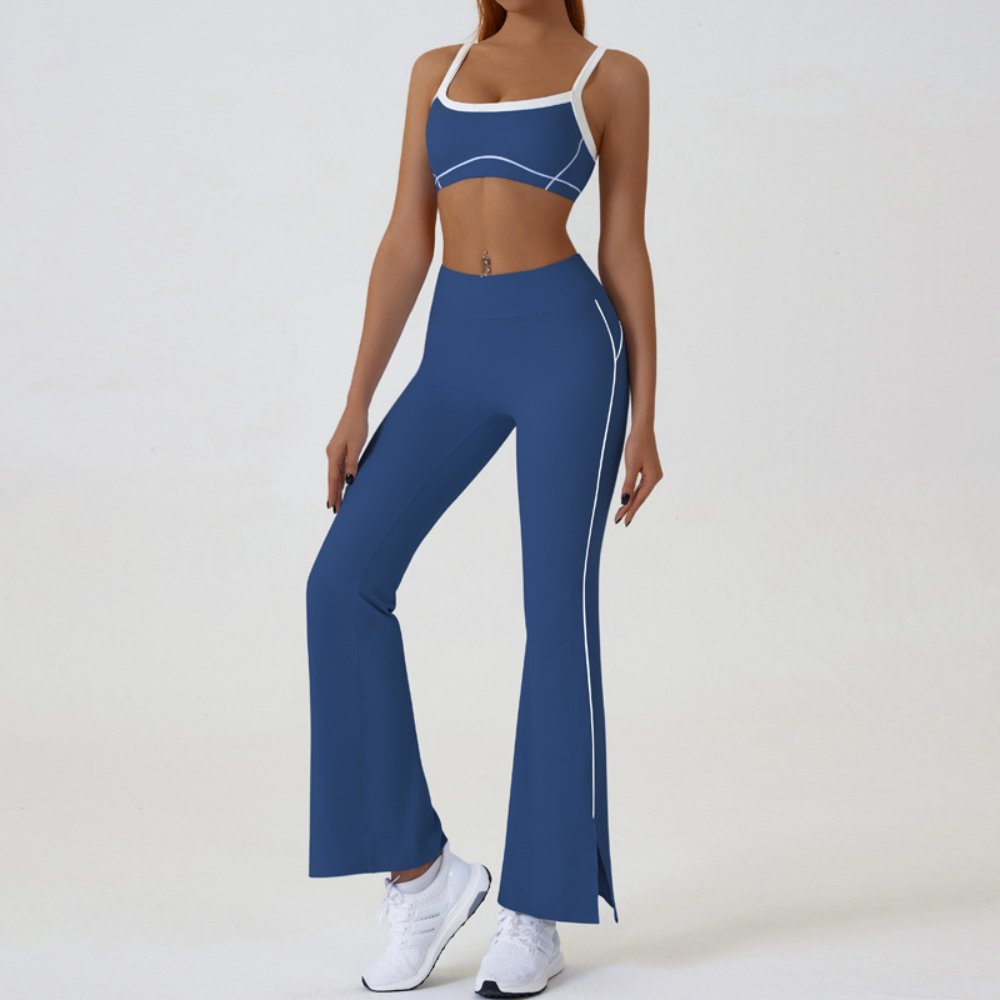
The colour-block yoga set presents a useful starting point for contrast trim. Its gallery includes different bottom silhouettes. Ask which photographed combination the quotation covers, and give each approved pairing its own reference rather than treating the gallery as a single fixed packing list.
- Identify the exact top and bottom combination.
- Keep a front and back photograph of the paired sample.
- Record size pairing and retail pack identifiers.
Compare outfit decisions side by side
A useful comparison explains what changes in the buying decision. A contrast-trim outfit needs alignment between coloured panels and edges. A cross-back reference needs an agreed top shape and back view. A jacket outfit introduces closure and layering questions. These are sample review priorities, rather than claims about how any garment performs.
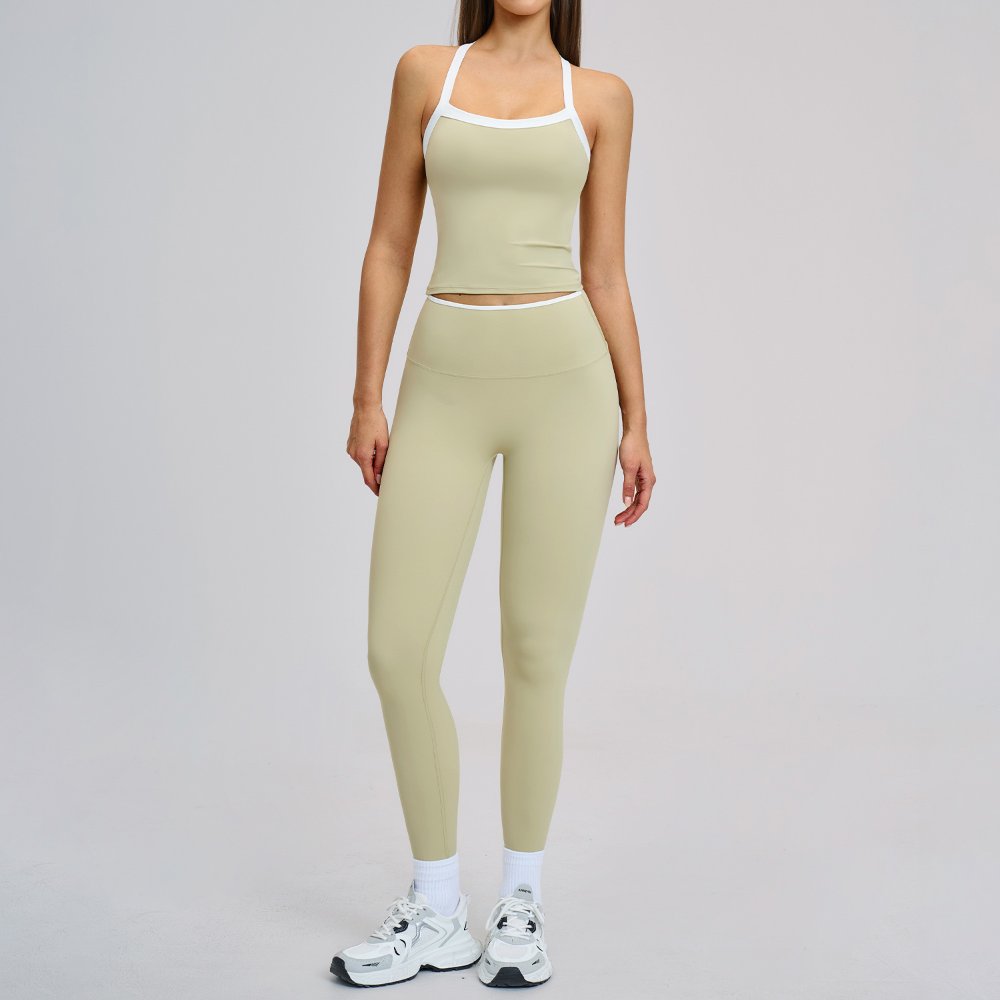
For the cross-back set #2027, confirm the exact top and bottom variant against the chosen gallery photograph. Do not approve a longer top by signing a sample record that identifies only a bra. The physical outfit, image reference and order description should tell the same story.
| Reference | Buyer decision | Sample focus |
|---|---|---|
| Colour-block set | Selected bottom silhouette | Contrast edges and paired colour |
| Cross-back #2027 | Exact top variant | Back coverage and top-to-waist overlap |
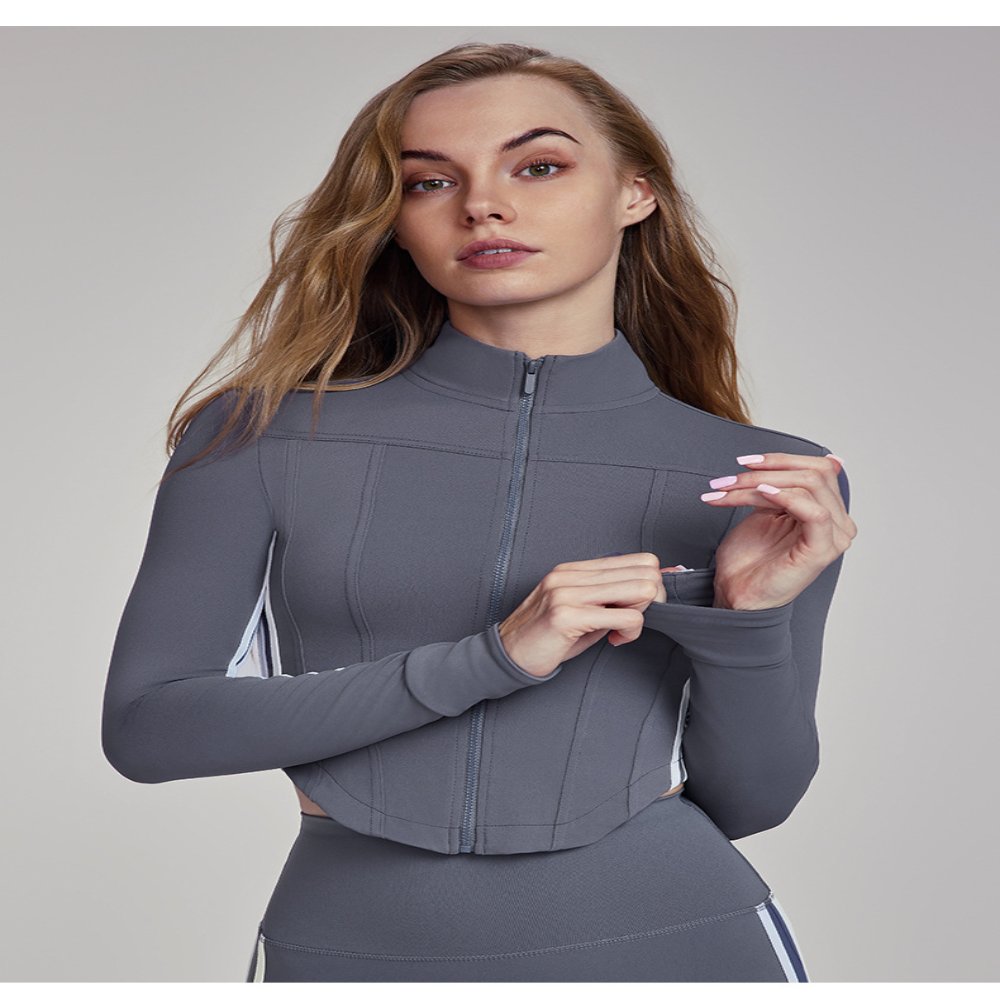
| Jacket set #4105 | Layered outfit | Closure, jacket length and trouser pairing |
Fit the outfit as a pair
Review the top and bottom together on the intended fit reference. Observe where the top finishes relative to the waistband when standing, reaching and sitting. Ask the reviewer to note gaps, overlap or pulling in plain language. A photograph of the front view alone cannot settle how the pairing behaves through these ordinary movements.
Keep garment measurements separate from body measurements, and label which is being recorded. Include the selected top length, bottom rise, inseam and waistband position in the sample comments. If the pieces require different sizes, ask whether that combination can be supplied and packed as requested before building it into a retail offer.
Match colour, details and sample revisions
Place both pieces beside the same agreed colour reference under consistent lighting. Compare the main fabric, binding, visible stitching and any zipper. A colour name can cover several visual interpretations, especially when two different garment structures are paired. Record the reference used so a later review does not depend on memory or a phone screenshot.
The jacket and flared-pants set #4105 adds an easy-to-identify closure detail. Review the jacket with the selected bottom and distinguish approved design details from sample comments still awaiting a response. Give each revision a date and retain the earlier comments so that a corrected detail does not reopen a settled one.
Turn the approved pairing into an order record
Write the set reference, component references, selected colours and quantity breakdown on the purchase enquiry. Specify whether the pair shares one retail pack or uses separately labelled bags. Provide a packing example that shows which identifiers the receiving team should match. This connects the sample decision to the physical goods your warehouse expects to receive.
Keep the approval package concise: the final paired photographs, component measurement sheets, colour reference and resolved comments belong together. Send that package through Jinsheng contact with the requested assortment. Ask for written confirmation of availability and commercial terms for that exact combination. A catalogue example is a starting reference; the agreed order defines what will be supplied.
Frequently Asked Questions
Is a matching colour name enough to approve a set?
No. Compare the actual pieces together against the agreed reference. Record any difference in fabric appearance or trim colour before approving the pairing.
Can the top and bottom have different sizes?
Include the requested pairing in the enquiry and obtain confirmation. A matching set photograph does not establish mixed-size ordering or packing options.
Should every photographed variant be ordered?
Choose the combinations that suit your assortment. Identify each selected gallery view and ask the supplier to confirm exactly which pieces the quotation includes.
What should remain with the approved sample?
Keep paired photographs, component measurements, colour references and the final resolved comments. These records help purchasing and receiving refer to the same outfit.